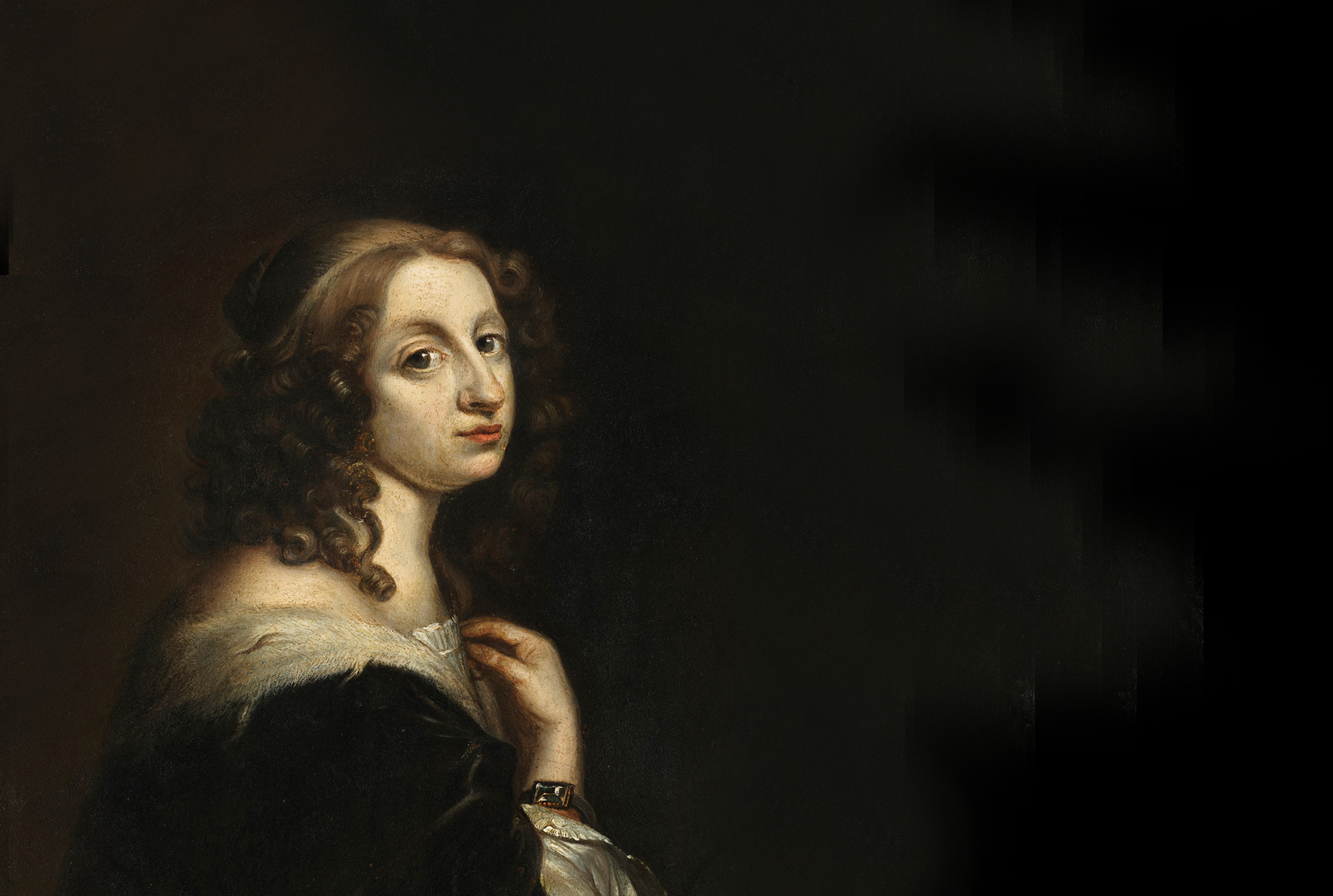
Queen Christina of Sweden
Christina was the daughter of Gustavus Adolphus and Maria Eleonora of Brandenburg. She was only six years old when her father was killed at the Battle of Lützen and she was proclaimed queen. In practice, however, Sweden was governed by a regency council led by the Lord High Chancellor Axel Oxenstierna until 1644, when Christina came of age.
Her reign was marked by peace negotiations. When peace was concluded after the Thirty Years’ War in 1648 with the Peace of Westphalia, she was celebrated as a peacemaker. Her coronation in Stockholm two years later became the most lavish ever seen in Sweden.
A Vision of a Cultural Sweden
Queen Christina wanted to make Sweden a cultural great power. She collected art and books and took a deep interest in literature, theatre, science, and philosophy. Prominent cultural figures, such as the French philosopher René Descartes, were invited to her court.
Abdicated in 1654
After a ten-year reign, Christina abdicated in 1654 and left the country. The decision stirred strong emotions. When she chose to convert to Catholicism the following year, shockwaves spread across Europe. It was seen as an affront to her father’s Protestant legacy, but a great triumph for the Pope, who received her in Rome. Despite her abdication, Christina continued to play a role in high politics. She conspired to seize power in Naples, then a kingdom, and put herself forward as a candidate for the Polish throne.
Buried in St Peter’s Basilica
Christina spent the last two decades of her life permanently in Rome. She became involved in church politics and made significant cultural contributions. When she died in 1689, she was buried with great ceremony in St Peter’s Basilica in the Vatican. There she rests as one of the few women buried alongside popes and leading figures of the Catholic Church.
Discover Queen Christina at the Royal Armoury
At the Royal Armoury in Stockholm, you can see objects connected to Queen Christina, such as her small childhood bodice, her coronation robe, a saddle, even a lock of her hair.
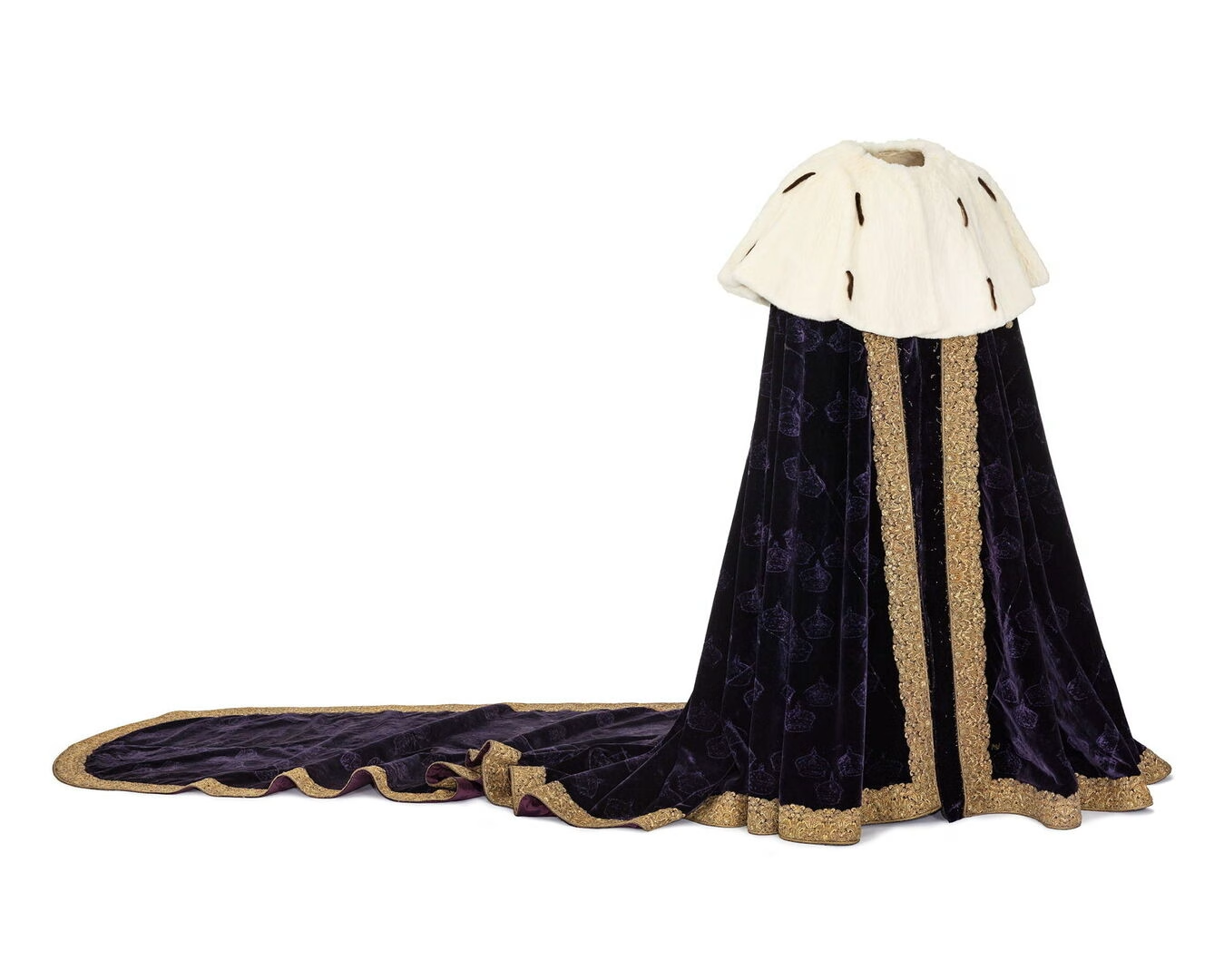
Queen Christina's Coronation Robe
The robe of purple velvet was originally decorated with 764 closed crowns and many pearls.
“Now Christina is crowned King,” was proclaimed after the coronation ceremony in Stockholm Cathedral (Storkyrkan), when Christina was clothed in the purple robe that is now kept in the Royal Armoury. The coronation in Stockholm in 1650 was the most talked-about state ceremony of the century and one of the most lavish coronations ever held.
The coronation robe, like many other luxury items, had been commissioned from France. It is nearly four meters long and features a wide gold border. The silk velvet still retains a striking sheen. Of the original 764.5 gold-embroidered crowns, however, only the impressions remain. They were removed in the 18th century, an act that in retrospect may seem almost symbolic. Four years after the coronation, Christina abdicated, converted to Catholicism, and departed for Rome. The crown was then given to her cousin, Charles X Gustav, who also inherited the robe.
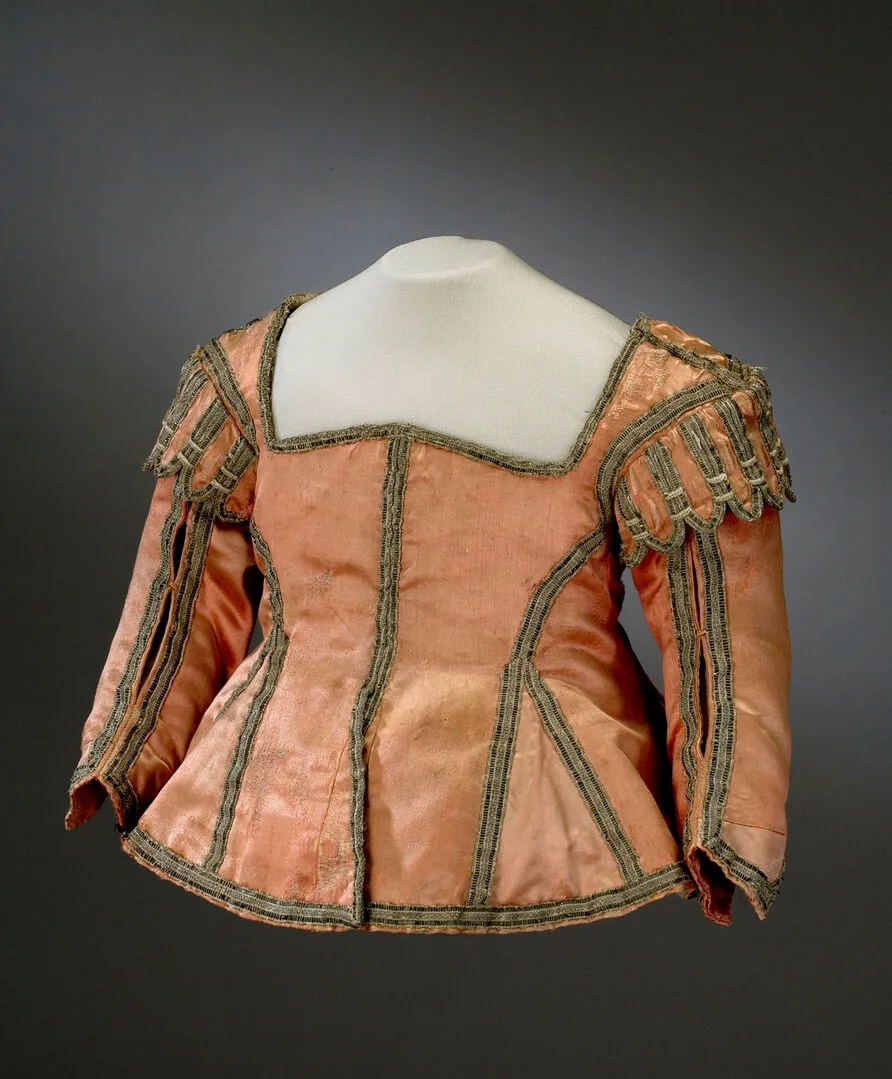
Childhood bodice
Most likely worn by Queen Christina at around two years of age.
On view in the exhibition Kunglig barnkammare
This small silk bodice was worn by Christina when she was about two years old. At the time, the fabric was a vivid rose-red. The tabs at the shoulders, as well as the seams and outer edges, are decorated with silver braid, typical of 1620s fashion.
The garment was preserved because the lady-in-waiting Sara Larsdotter Stiernflycht was allowed to keep it when she left her service at Tre Kronor Palace in 1632. The bodice was inherited within the Stiernflycht family until the late 19th century, when it was sold to the Royal Armoury. The museum also holds a small white child’s shirt trimmed with lace, which likewise came through Sara Larsdotter’s descendants. Both garments are now on display in the Royal Armoury’s exhibition.
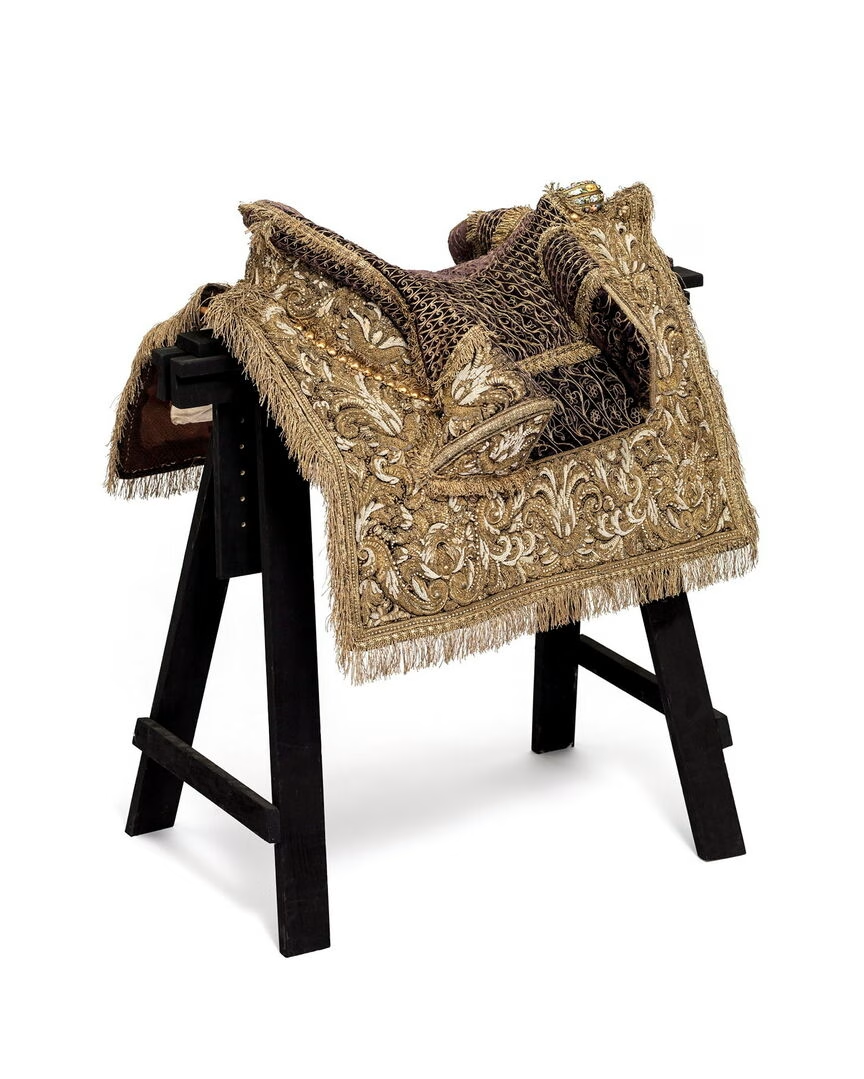
Queen Christina’s coronation saddle
Decorated with gold and pearls, embroidered in France and assembled in Sweden in 1650